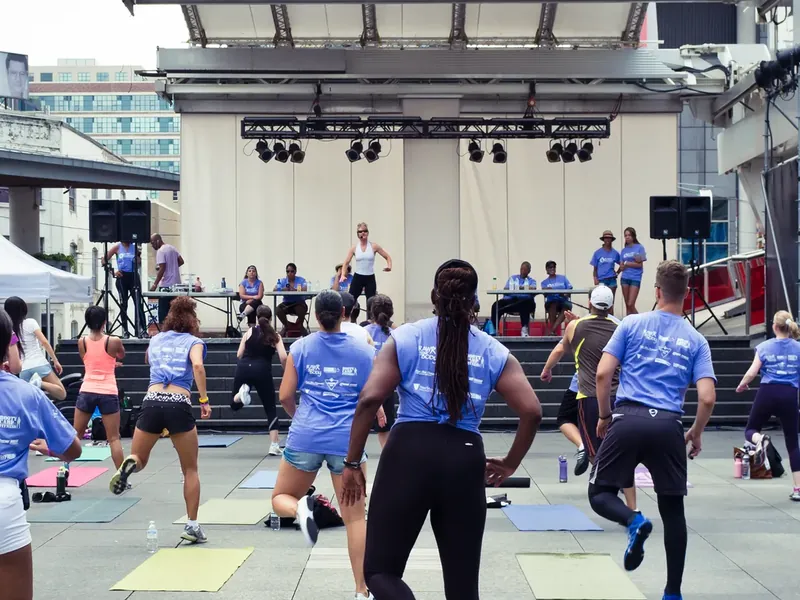
Bootcamp classes look varied from the outside, but they draw on a short list of moves. Each one is cheap in equipment, trains a lot of muscle at once, and has an easier and a harder version so a whole room can do it together. Below are 20 of them, grouped the way a coach builds a round, with the one cue that matters most for each.
How to use this list
A round works best when it takes at least one move from each of the four groups and never puts two moves for the same muscles next to each other. Squats followed by lunges leave your legs done before the round is half over; squats, then push-ups, then mountain climbers, then glute bridges lets each area recover while another works.
Pick the version of each move you can do with clean form for the whole work interval. If the last ten seconds turn into half reps, drop to the easier version. When the whole interval feels controlled for two sessions in a row, move up. The form mistakes guide covers the faults that show up when the timer runs down.
Lower body
| Move | Cue | Easier | Harder |
|---|---|---|---|
| Squat | Sit back and down, knees tracking over the toes | Squat to a chair | Jump squat or goblet squat |
| Reverse lunge | Step back, drop the back knee toward the floor, torso tall | Hold a wall or chair | Hold a weight or add a knee drive |
| Lateral lunge | Push the hips back over the bent leg, other leg straight | Smaller step, shallower bend | Hold a kettlebell at the chest |
| Step-up | Whole foot on the box, drive through the heel | Lower step | Higher box or a weight in each hand |
| Glute bridge | Squeeze the glutes at the top, ribs down | Shorter hold at the top | Single leg, or a weight on the hips |
Lower-body moves use the biggest muscles, so they push the heart rate up almost as much as the cardio stations. Put one early in the round while your legs are fresh and technique is easiest to hold.
Upper body
| Move | Cue | Easier | Harder |
|---|---|---|---|
| Push-up | One straight line from head to heels, chest to a fist's height from the floor | Hands on a bench or knees down | Feet raised, or a pause at the bottom |
| Bent-over row | Flat back, pull the elbows toward the hips | Band anchored at chest height | Heavier dumbbells, slow lowering |
| Shoulder press | Ribs down, press straight up without leaning back | Light dumbbells or a band | Push press with a small knee dip |
| Band pull-apart | Arms straight, squeeze the shoulder blades together | Lighter band, wider grip | Heavier band, hold for two seconds |
| Tricep dip | Elbows point back, shoulders away from the ears | Feet close, knees bent | Legs straight, feet on a second bench |
Most bootcamp rounds lean on pushing. Adding one pulling move, a row or a band pull-apart, keeps the shoulders balanced and costs nothing if a band is in the kit.
Core
| Move | Cue | Easier | Harder |
|---|---|---|---|
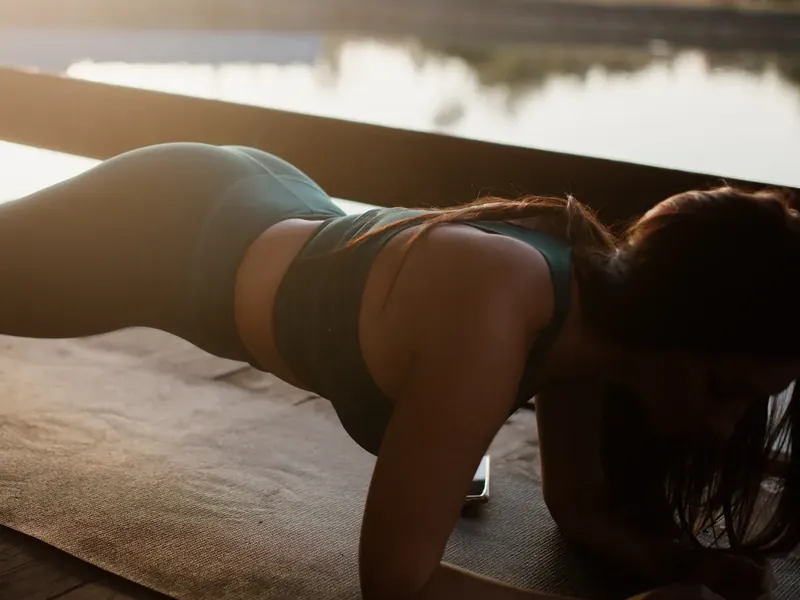
| Plank | Squeeze glutes and brace, hips level with the shoulders | Knees down, or hands on a bench | Shoulder taps, or feet on a step |
| Side plank | Hips lifted, body in one line | Bottom knee down | Top leg raised, or a slow hip dip |
| Dead bug | Lower back stays pressed into the floor | Move only the legs | Hold a light weight overhead |
| Russian twist | Turn from the ribs, chest up | Feet on the floor | Feet off the floor, holding a weight |
| Leg raise | Lower slowly, stop before the back arches | Bent knees | Straight legs, hands off the floor |
Core stations make natural recovery slots. A plank after a sprint lets your breathing settle while the work goes on, which is why coaches often place them right after the hardest cardio move.
Cardio
| Move | Cue | Easier | Harder |
|---|---|---|---|
| Jumping jack | Land softly on the balls of the feet | Step-out jack with no jump | Seal jack or star jump |
| High knees | Knees to hip height, stay tall | Marching pace | Sprint pace with fast arms |
| Mountain climber | Hips level with the shoulders, drive the knees forward | Hands on a bench, slower pace | Faster pace, or cross the knee to the opposite elbow |
| Burpee | Hands down, step or jump back into a solid plank | Step back and forward, no jump | Add a push-up and a tuck jump |
| Skater hop | Land on one foot, knee soft, hold for a beat | Step side to side | Wider jumps, faster rhythm |
All five are high impact at the harder level. In a flat with neighbours below, or with sore knees, the easier column keeps the heart rate up without the landings.
A sample round from this list
Here is one way to put the list together for a first session at home: 30 seconds of work and 20 seconds of rest, three rounds, a minute of rest between rounds. With a five-minute warm-up and cooldown the whole session takes about 25 minutes.
When that feels easy, swap each move for the version in the harder column one at a time, or let the circuit builder write a round from your time and kit. The beginner program is a finished version of the same idea, and what a bootcamp workout is explains how the rounds fit into a full class. For other ways to arrange the same moves without equipment, such as a ladder, a chipper or a deck of cards, see bodyweight bootcamp ideas.
Frequently asked
What exercises are done in a bootcamp workout?
Mostly basic full-body moves: squats, lunges, step-ups and glute bridges for the legs, push-ups, rows and presses for the upper body, planks and dead bugs for the core, and jumping jacks, high knees, mountain climbers and burpees for cardio.
Can you do bootcamp exercises without equipment?
Yes. Every move on this list has a bodyweight version. A bench, a band or a single kettlebell adds options, but none of them is needed to start.
How many exercises should a bootcamp round have?
Five to eight is typical. Fewer than five makes each station repeat too often; more than eight makes the round long enough that form slips before it ends.
Which bootcamp exercises are best for beginners?
Squats to a chair, incline push-ups, glute bridges, planks on the knees and step-out jumping jacks. They train the same muscles as the harder versions with less impact and less skill.