Where this format actually comes from
What most people call "bootcamp" is, structurally, circuit training: a series of exercises performed back to back with minimal rest, mixing resistance and aerobic work in one session. The format has a specific origin, R.E. Morgan and G.T. Anderson developed it in 1953 at the University of Leeds, and it's stayed popular because it's genuinely efficient: research from Baylor University and the Cooper Institute has found it meets American College of Sports Medicine guidelines for exercise intensity while building both cardiovascular fitness and muscular endurance in the same session.
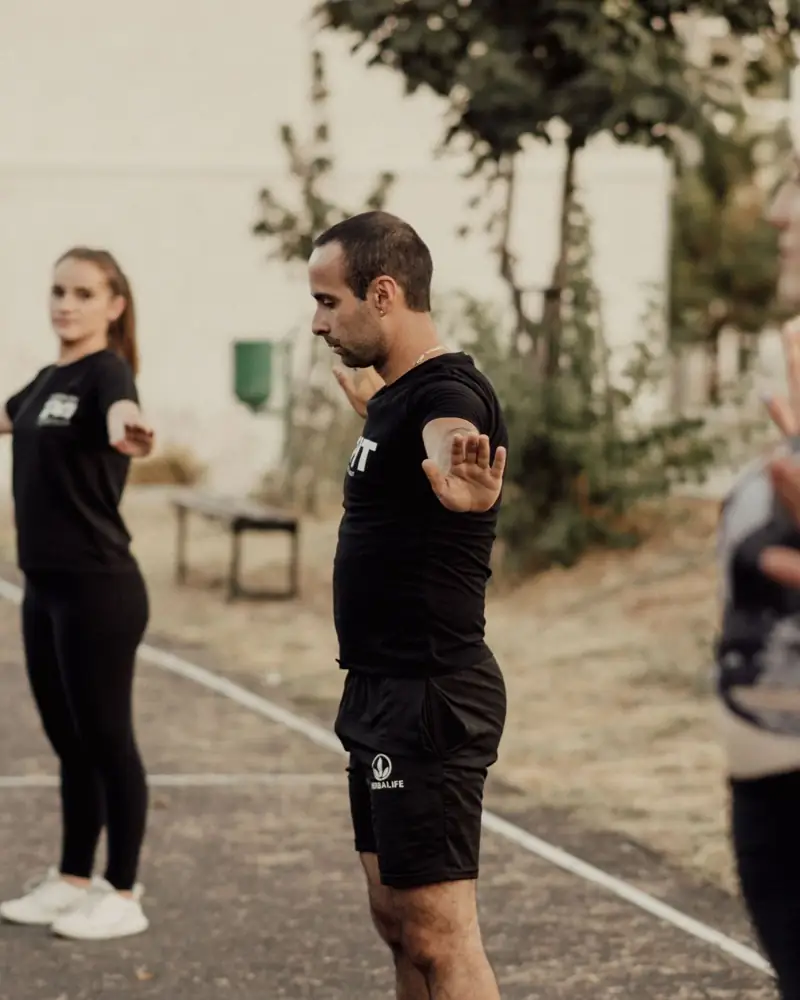
Outdoors, that structure maps directly onto whatever a park gives you: a bench for step-ups and dips, open grass for sprints and bodyweight moves, no waiting for equipment because there isn't any to wait for.
The circuit
Five-minute warm-up: a slow lap of the space you're using, then dynamic stretches. Then five stations, 45 seconds of work at each, 15 seconds to move to the next station, three full rounds:
Five stations, 45 seconds on and 15 to move, three rounds with two minutes between them: 19 minutes of circuit. The timer opens with these stations loaded and names each one as it comes up.
Rest two minutes between rounds. The sprint station is the one place the outdoor format beats an indoor one directly, there's no equivalent to a real 20-meter sprint on a gym floor. The free interval timer carries this 45/15 scheme as its outdoor preset.
What to check before you start
- Surface. Grass and packed dirt are forgiving on joints; loose gravel and uneven pavement raise ankle-roll risk during the sprint station specifically.
- Weather. Heat changes the session more than cold does, cut work intervals or add rest on hot, humid days rather than pushing through at the planned pace. Kit that stays outside has its own problems, covered in outdoor equipment that lasts.
- Visibility and footing at dawn or dusk. If you're training in low light, favor the bench stations over the sprint interval, where uneven ground is harder to see.
Training outdoors in heat
The weather advice above has specifics behind it. Public health guidance for exercising in heat calls for scheduling outdoor sessions earlier or later in the day rather than at midday when the sun is hottest, starting at a slower pace and building up rather than opening at full intensity, and drinking water before you're thirsty rather than waiting for thirst as the signal. Muscle cramping is flagged as an early sign of heat-related illness, worth treating as a stop signal during the sprint or bench stations, not something to push through to finish the round.