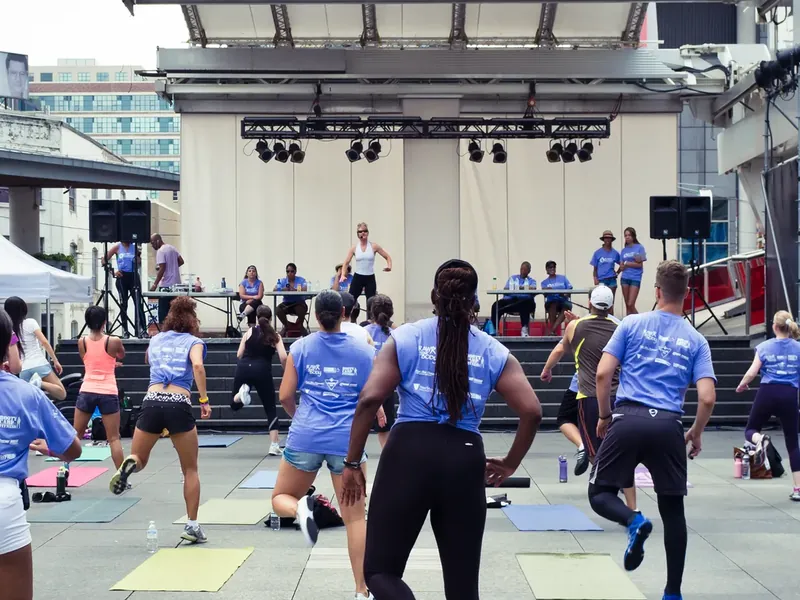
What a warm-up is for
A warm-up does two things: raises muscle temperature and heart rate gradually so the first work interval isn't a cold start, and rehearses the movement patterns the session will use at low intensity. It is not a workout before the workout. If the warm-up leaves you breathing hard enough that round one suffers, it took intensity that belonged to the circuit.
Dynamic beats static before training. Moving through a range of motion, leg swings, arm circles, easy squats, prepares muscles for work; holding a long static stretch on cold muscle does not, and the research consensus over the last two decades has moved firmly toward dynamic preparation before intense exercise, with static stretching shifted to after the session.
The 5-minute warm-up, move by move
The last slot matters most. Before the HIIT session, that's a few slow burpees and jump squats at half speed; before the outdoor circuit, a few bench step-ups and an easy 20-meter stride. Rehearsing the actual moves is what separates a warm-up from generic cardio.
The cooldown, and what it's actually for
The cooldown's job is a gradual return: two to three minutes of walking lets heart rate and blood pressure come down progressively instead of dropping abruptly from a final all-out interval to standing still. After the walk, when muscles are warm, is the right slot for static stretching, 20 to 30 seconds per hold, covering whatever the session loaded most: quads and glutes after squat-heavy circuits, chest and shoulders after push-up-heavy ones.
What a cooldown doesn't do is prevent muscle soreness. Soreness a day or two after a new or unusually hard session is normal and fades as the body adapts; the cooldown makes the end of the session safer and the stretching more productive, but the recovery between sessions is what actually manages soreness.
Frequently asked
Should I stretch before a bootcamp workout?
Not with long static holds. Before the session, use dynamic movements that rehearse the circuit's exercises at low intensity. Save static stretching, held 20 to 30 seconds per muscle, for after the cooldown walk when muscles are warm.
How long should a bootcamp warm-up be?
Five minutes covers it for a 20 to 45 minute session. The test is physical, not clock-based: light sweat, elevated breathing, and the first work interval shouldn't feel like a cold start.
Can I skip the cooldown if I'm short on time?
Skip the stretching before you skip the walk. Two minutes of easy walking brings heart rate down gradually instead of stopping abruptly after a high-intensity interval, which is the part of the cooldown with the clearest purpose.