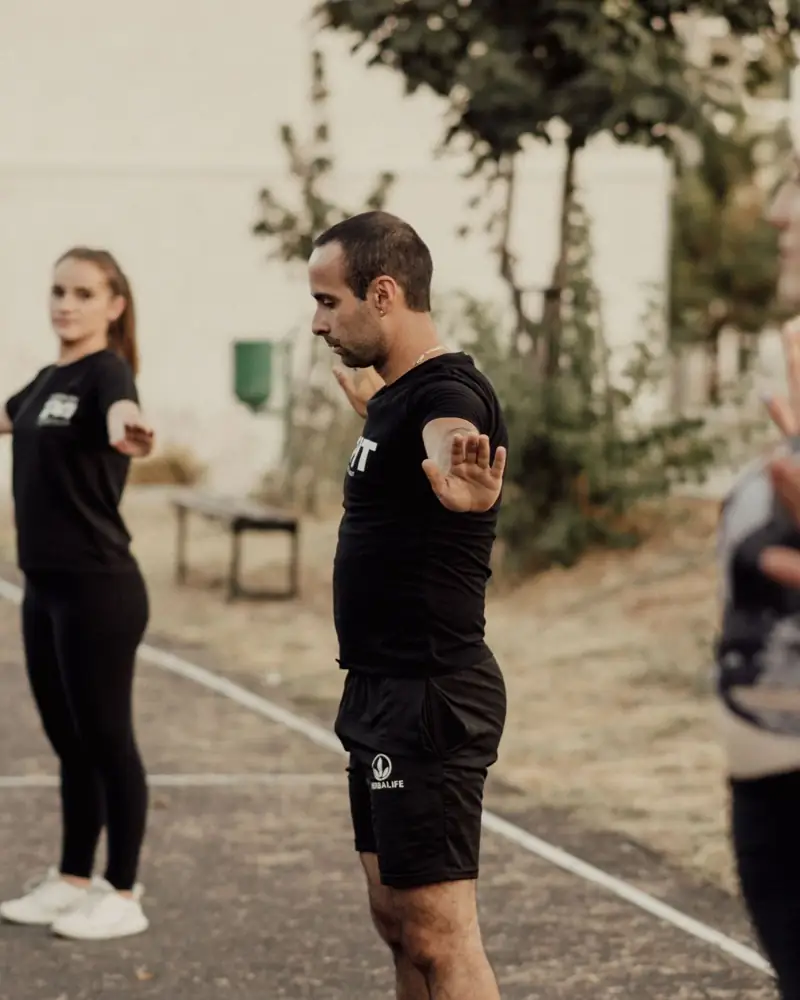
This 30-minute bootcamp workout uses six bodyweight stations across three rounds. Each station lasts one minute: 35 seconds of exercise and 25 seconds to rest and change position. Add a one-minute break after rounds one and two. With a five-minute warm-up and five-minute cooldown, the total is exactly half an hour.
Use a clear, non-slip floor and a wall. The routine is an editorial example for generally healthy adults, not a fitness test or an injury recovery prescription. Choose comfortable versions of the movements and stop for pain, dizziness, chest discomfort or unusual shortness of breath. Anyone unsure whether these movements suit a condition or injury should obtain individual guidance.
The half hour, minute by minute
The circuit contains 18 work intervals, totalling 10 minutes and 30 seconds of work. Station recovery adds 7 minutes and 30 seconds, and the two longer breaks add two minutes. This is why a 30-minute session should not be described as 30 minutes of continuous hard exercise.
Warm up for the movements ahead
Begin with easy marching and small side steps. Gradually enlarge the arm movement and practise comfortable squats and wall press-ups. Keep this first five minutes gentle enough to check the available space, the floor grip and the movement versions that feel controlled.
The American Heart Association advises gradually warming up and cooling down, commonly for five to ten minutes each. The five-minute allowance here is the short end of that guidance. If more preparation is appropriate, extend the session or remove a round rather than compressing the warm-up to preserve the headline.
The six stations
Bodyweight squat. Stand with feet in a comfortable position, bend through the hips and knees, and stand again. Use a chair sit-to-stand if controlling the depth is easier with a seat behind you.
Wall press-up. Place hands on the wall and move the body towards it and away under control. Step closer to make it easier. Avoid rushing to match another person's repetition count.
Brisk march. Alternate legs and use the arms to increase the pace if appropriate. Keep one foot on the floor; a running or jumping version is optional only if it already suits your training.
Hip hinge. With a small bend at the knees, send the hips backwards and return upright. Keep the movement comfortable and stop before the back changes position to gain extra range. The objective is controlled practice, not touching the floor.
Standing side steps. Step out and return within the space available. Choose a pace that allows a stable change of direction. Small steps are a valid version for the whole interval.
Supported calf raise. Use a wall for balance, raise the heels and lower slowly. Rest when control fades rather than bouncing through the remaining seconds.
Adjust the effort, keep the clock
Using 20 seconds of movement and 40 seconds of rest preserves the one-minute stations and the 30-minute schedule. That makes the session easier to follow without adding new calculations. A missed interval can also become recovery; there is no need to recover lost repetitions later.
For a familiar routine that has become easy, add controlled repetitions within the work period or choose a slightly harder version. Change only one variable at a time. The progressions guide explains when to change the format after simpler adjustments stop being useful.
Set the timer and record the result
The interval timer can run each six-station round with 35 seconds of work and 25 seconds of rest. Pause for the extra one-minute round breaks. Write down the versions used, completed rounds and any intervals taken as rest, so the next attempt starts from your actual session.
Use the CDC talk test during the aerobic stations: moderate effort allows conversation but not singing. Strength work needs its own check for controlled repetitions. The circuit-building guide helps organise a more varied session once the basic timing is familiar.
Common questions
Is 30 minutes enough for a bootcamp session?
It is enough to run this complete session with its breaks. Whether it fits someone's overall exercise needs depends on the rest of the week and the intensity achieved.
Should every station be done as fast as possible?
No. Keep a pace that preserves control and lets you use the recovery period. The work interval sets an upper time limit, not a requirement to move continuously.
Can this replace all strength training?
This short equipment-free circuit has limited pulling work and resistance options. The equipment guide explains what additional kit can contribute when a fuller programme needs it.
Sources and checks
Checked 15 November 2026. Calculated examples and editorial layouts are identified in the text.