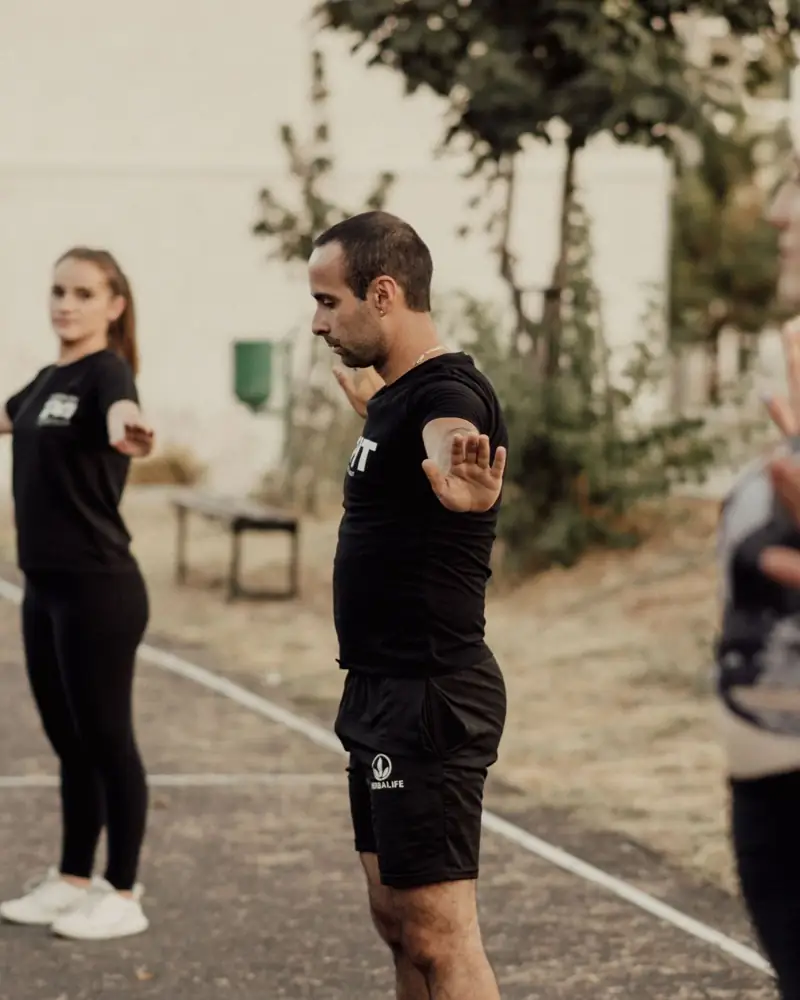
This low-impact bootcamp workout takes 20 minutes including the warm-up and cooldown. Complete five stations for 30 seconds of movement and 30 seconds of rest, twice through. There are no jumps or floor transitions. Use a clear floor, a wall and a sturdy chair without wheels, placed where it cannot slide.
The timing is an editorial sample session, not a medical rehabilitation programme. Low impact describes the absence of repeated landings; the effort can still be high. Start gently, shorten a work interval when needed and stop for pain, dizziness, chest discomfort or unusual breathlessness. Seek individual advice if a condition or injury affects which movements are appropriate.
The full 20-minute schedule
Set the interval timer for ten intervals of 30 seconds of work and 30 seconds of recovery. Run the warm-up and cooldown separately. There is no extra round break hidden in the total: each five-minute round already includes its recovery periods.
The five stations, in order
March in place. Lift each foot to a comfortable height and swing the arms naturally. Keep the steps quiet and use a smaller lift if balance becomes uncertain. A light touch on a stable support is an option.
Chair sit-to-stand. Start seated with feet flat. Stand to a comfortable upright position, then sit under control. Use your hands for help when needed. The chair is a support, not a target for dropping quickly between repetitions.
Side steps. Take one small step sideways, bring the other foot towards it and return. Keep the motion within the available floor space. Avoid bouncing or turning it into a jumping jack.
Wall press-up. Face a wall, place your hands against it and bend the elbows to bring the body towards the wall before pressing away. Move the feet closer if the effort is too high. Keep the surface clear and the feet secure.
Supported calf raise. Stand tall with a chair or wall available for balance, raise the heels slowly and lower them under control. Stay within a comfortable range. The support should remain stable when lightly loaded.
The NHS strength routine includes sit-to-stand, wall press-ups and calf raises. The circuit timing here is our way of arranging those movements alongside simple standing cardio. Completing a timed station does not require continuous repetitions: pause whenever the movement becomes rushed.
Keep the effort appropriate
The CDC's talk test gives a practical check for aerobic effort: at moderate intensity, a person can talk but cannot sing. If a few words require a breath, the effort is vigorous. Use that distinction during the marching and side-step stations instead of assuming a workout is easy because it has no jumping.
For strength stations, preserve control and stop before the last repetition becomes a struggle. Adjust the wall distance or use assistance for the chair movement. The form guide gives the checks to make before increasing pace.
Change the dose without adding impact
For a shorter first attempt, complete one round between the same five-minute warm-up and five-minute cooldown. That is a 15-minute session. Another option is to work for 20 seconds and recover for 40; each station still occupies one minute and the full session remains 20 minutes.
When the original version feels comfortable, increase the movement time before changing the exercise. A 40-second work period and 20-second recovery keeps the same total. Change one factor per session so there is a clear explanation for any increase in fatigue.
Where it fits in a training week
Repeat only when recovered enough to perform the movements comfortably. A low-impact label does not guarantee that the same muscles are ready the next morning. The recovery guide explains how to space harder sessions and use easy activity between them.
This routine is one possible session in a broader week. It does not cover every muscle group or replace a personalised strength plan. For a longer introduction with progression, use the beginner bootcamp guide and keep this standing circuit as an alternative on days when floor work is inconvenient.
Common questions
Is low impact the same as low intensity?
No. Fast stepping can raise breathing substantially without a jump. Adjust the pace and use the talk test.
Can the workout be done in an upstairs flat?
Quiet stepping removes repeated landings, but the floor and building still matter. Test a gentle pace and keep the chair stable. Avoid claiming that any workout is completely silent.
How many calories will it burn?
There is no reliable universal figure for this session. Body size, effort, rest and movement choice all change energy use. Record completed intervals and how the session felt instead.
Sources and checks
Checked 15 November 2026. Calculated examples and editorial layouts are identified in the text.